Why Is One Room Always Too Hot or Too Cold? HVAC Checks Before Replacing Your System
Your living room feels comfortable, but the bedroom never seems to catch up. Or your home office stays warm even while the air conditioner runs.
For Southern California homeowners, uneven temperatures can make an otherwise working HVAC system frustrating to live with. The cause may involve airflow, ductwork, insulation, or equipment performance. Before deciding you need a replacement, start by identifying what is happening—and where.

Start with a few simple checks
Check your system’s accessible air filter and follow the manufacturer’s instructions for cleaning or replacement. A clogged filter restricts airflow and can reduce cooling performance. Use the filter size and type recommended for your equipment.
Next, look around the affected room. Is furniture covering a supply vent? Is a rug or cabinet blocking a return grille? These openings need clear space so air can circulate.
Write down when the problem occurs. Is the room uncomfortable throughout the day, only during the afternoon, or mainly when the door is closed? Those details give your technician a useful starting point.
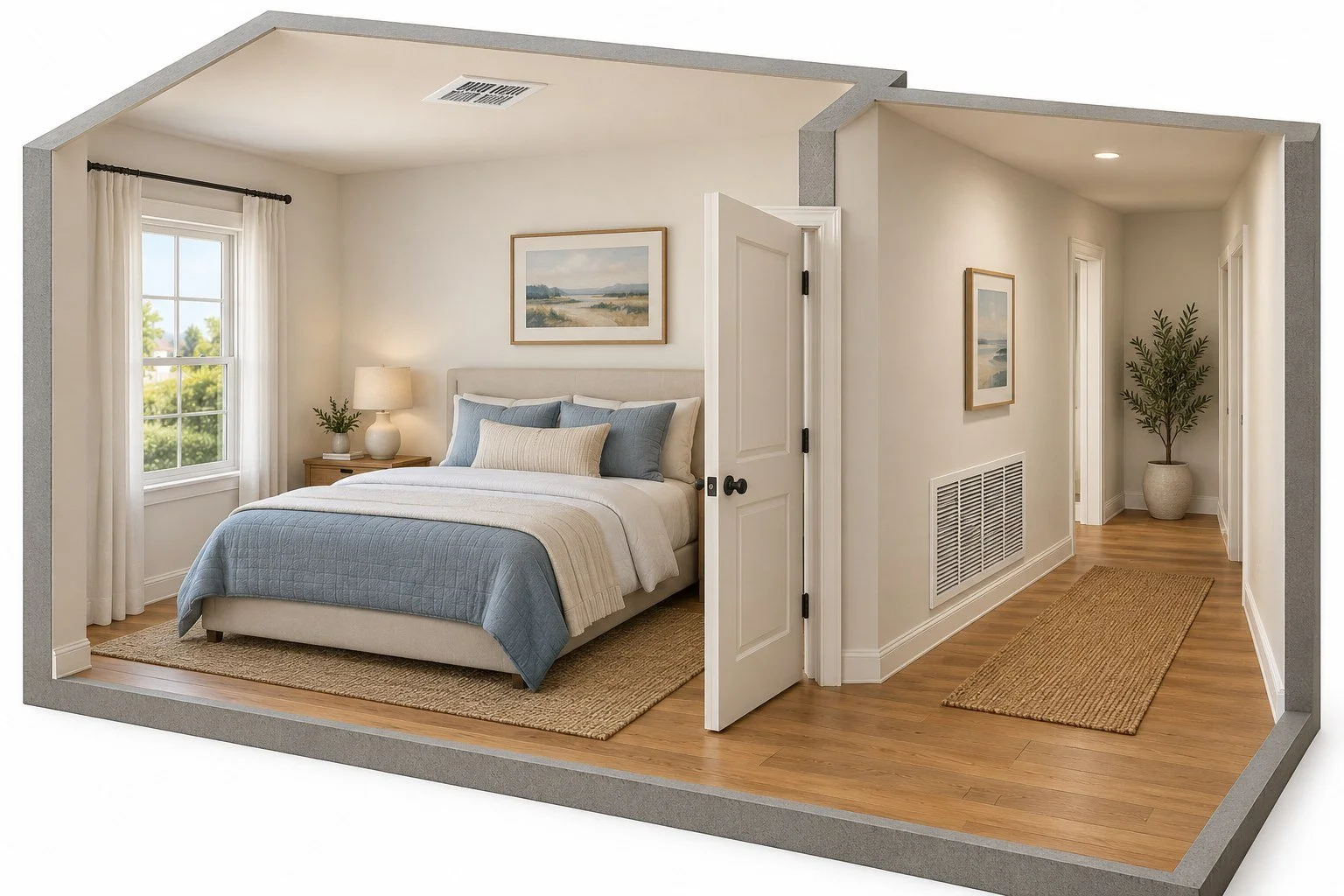
Pay attention to closed bedroom doors
Your HVAC system needs a path to deliver conditioned air and a path for air to return.
In some homes, closing a bedroom door restricts that return path. The result can be pressure differences and poor circulation, even when the equipment is running.
If comfort changes noticeably with the door open versus closed, mention it during your service visit. A technician can evaluate the return-air arrangement and determine whether changes are appropriate. Simply adding a larger air conditioner would not correct a restricted return path.
Have the ductwork checked
Ducts carry conditioned air to each room. Leaks, disconnected sections, crushed flexible ductwork, or missing insulation can affect how well that air reaches its destination.
Ask for an evaluation of both supply and return airflow, along with the condition of accessible ducts. After repairs, airflow should be checked again to confirm the improvement.
Avoid closing numerous vents in comfortable rooms to force air elsewhere. Excessive restriction can reduce airflow through the equipment and cause operating problems. Air balancing should account for the whole system.
Consider the home as well as the equipment
Uneven temperatures can also point to insufficient insulation or air leakage. A room may need improvements to its surrounding walls, ceiling, or other building components alongside HVAC work.
That is why a useful diagnosis looks beyond the thermostat reading. It should connect the room’s symptoms with equipment operation, air distribution, and the condition of the home.
Repair or replace? Diagnose first
A filter issue, duct defect, or airflow imbalance may call for a targeted correction. Frequent equipment repairs, declining performance, and rising energy use may justify discussing replacement.
Ask what is causing the discomfort, what the proposed work will address, and whether any additional issues will remain afterward.
Have a room that never feels comfortable? Call ZAFI Air Conditioning and Consulting, Inc. to discuss residential HVAC troubleshooting and the next steps for your home.