When a commercial HVAC system stops working, equipment selection can quickly become an urgent business decision. Planning while the system is still operating gives property owners and managers time to compare options, coordinate access, and prepare for an interruption.
For Southern California offices, retail spaces, and other commercial properties, a useful replacement plan starts with understanding the equipment you have and the building it serves.
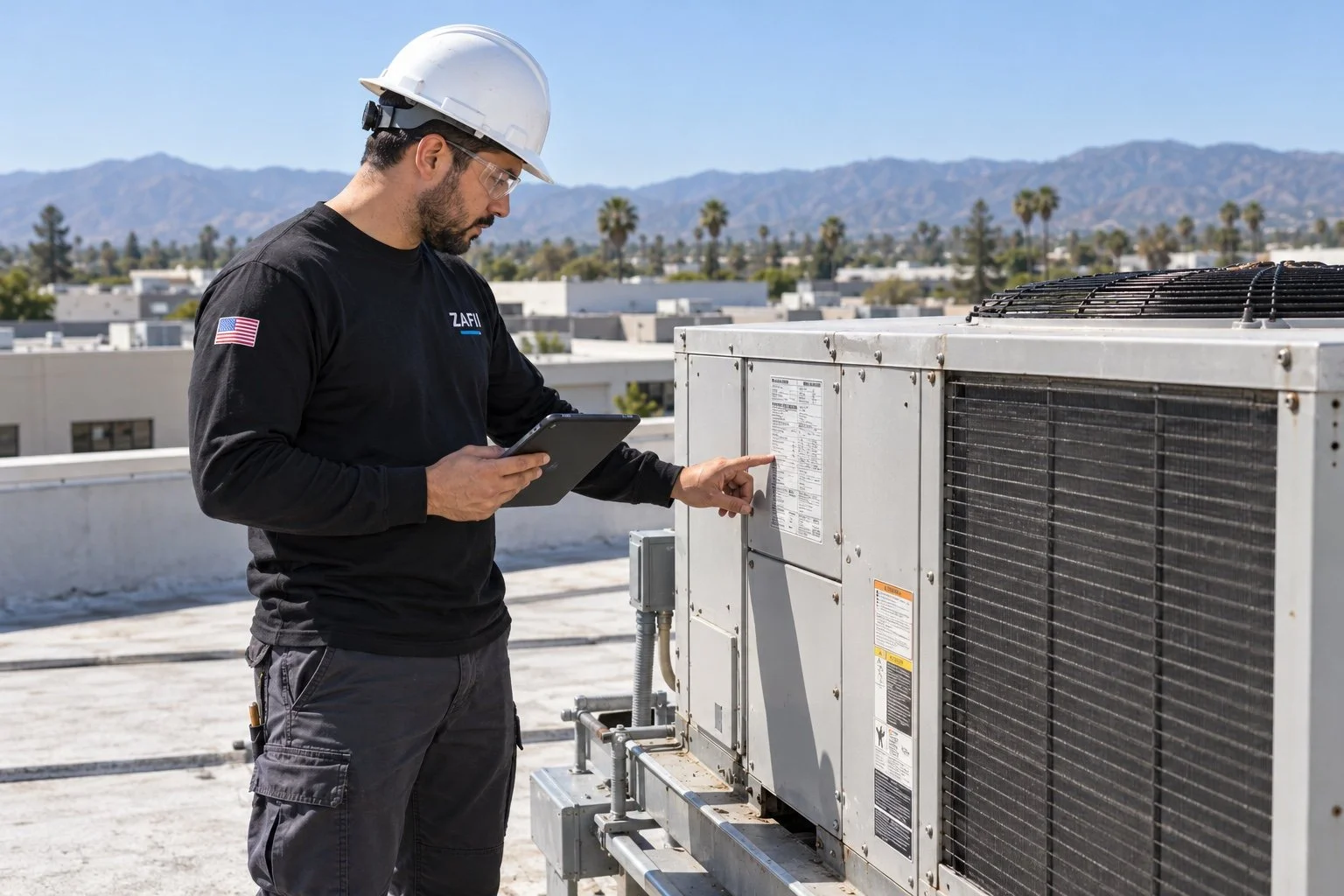
Illustration: rooftop equipment assessment.
1. Review condition and repair history
Create a simple equipment list with each unit’s location, model, approximate age, service history, and the spaces it serves. Include recurring complaints and repairs.
Ask your contractor to distinguish between an isolated repairable problem and broader equipment deterioration. Compare the proposed repair, remaining concerns, parts availability, and consequences of another failure.
Age belongs in that conversation, but it should sit alongside condition, reliability, and your plans for the property. Keep maintenance records available so the discussion starts with evidence.
2. Confirm what the building needs today
Replacing a rooftop unit with the same cooling capacity may be appropriate, but the existing nameplate should not be the only basis for selection.
Tenant improvements, occupancy changes, lighting upgrades, and changes in space use can affect heating and cooling needs. A former storage area converted into offices, for example, deserves a fresh evaluation.
Ask how the proposed capacity and airflow were determined. Proper sizing helps address comfort and operating performance; choosing a larger unit automatically is not a substitute for evaluating the building.
3. Define the complete installation scope
The equipment model is only part of a replacement proposal.
Ask what the work includes for removing the existing unit, getting the replacement into position, connecting to existing systems, and coordinating controls. For rooftop equipment, discuss access, lifting arrangements, support conditions, and connections at the roof.
Clarify who is responsible for electrical work, any required design or approvals, and related trades. A written scope makes proposals easier to compare and helps identify work that needs separate coordination.
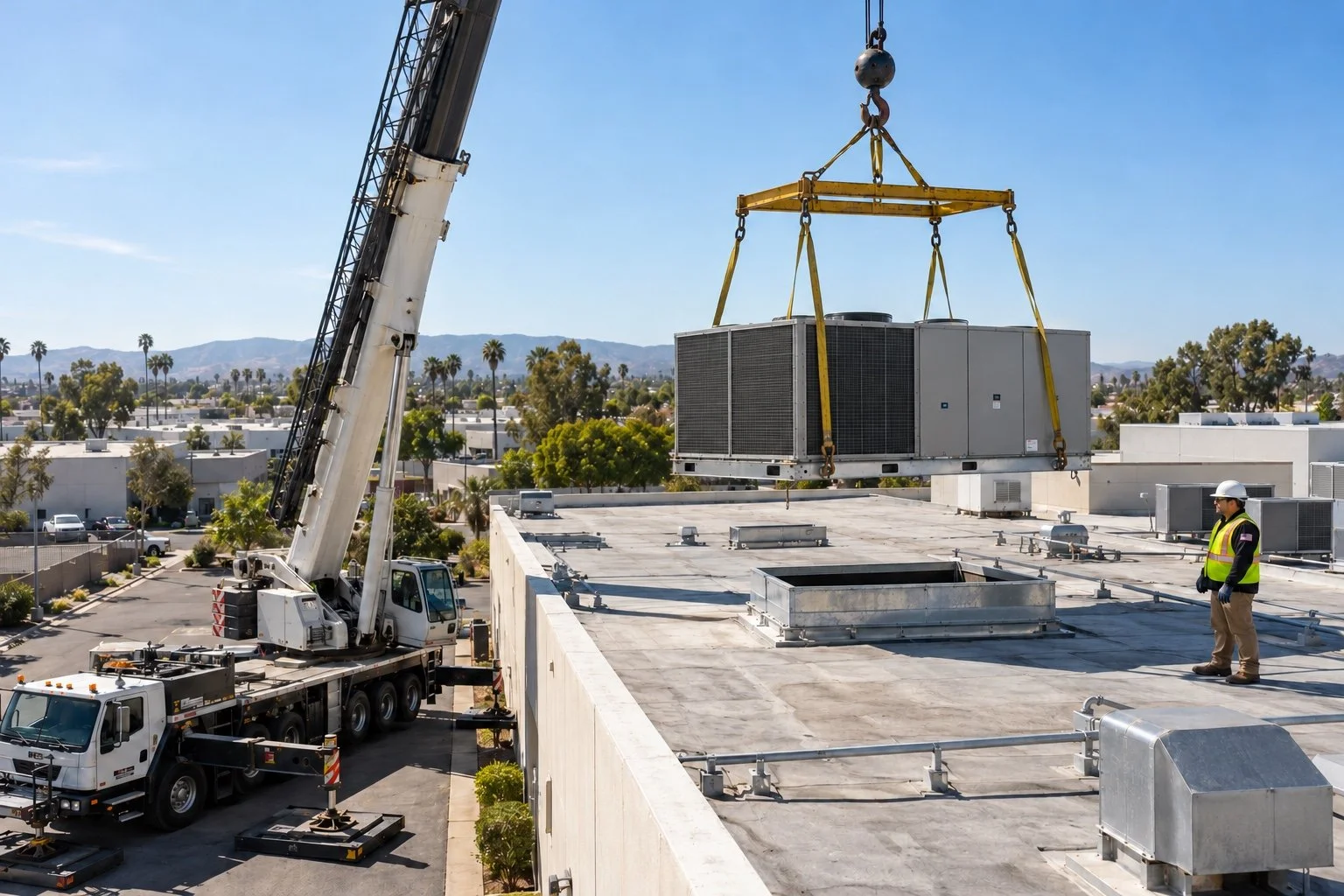
Illustration: crane-assisted rooftop HVAC replacement.
4. Plan around business operations
Identify which areas can tolerate an interruption and which require closer coordination. Discuss tenant access, delivery routes, building operating hours, and how occupants will be notified.
Confirm equipment availability before committing to an installation date. Where appropriate, ask whether work can be phased or whether temporary conditioning needs evaluation.
A replacement plan should explain the expected interruption and the arrangements needed to support continued building use. This is particularly valuable when one system serves several tenants or an important operating area.
5. Include startup and performance verification
A replacement project should include checking that the installed system operates as intended.
Ask how startup, airflow, ventilation controls, and applicable control functions will be verified. Request the relevant operating instructions, warranty documents, and maintenance recommendations at handover.
Those records give your property team a starting point for operating and maintaining the new equipment.
Considering a commercial HVAC repair or replacement? Call ZAFI Air Conditioning and Consulting, Inc. to discuss your equipment, building needs, and next steps.